
Narratives of Control
How historians manipulated narratives to conceal the awful truth about eugenics in Britain.

Population controllers have been remarkably skillful in creating narratives favourable to their campaigns and in adapting these to changing times and attitudes. For example, a person in 2025 would have difficulty understanding the viewpoint of those who opposed the proliferation of contraceptives at the beginning of the Twentieth Century. To a modern, the debate is framed in terms of a woman’s access ‘reproductive choice’. With limited knowledge, a modern would likely side with the progressives who pushed for change and assume that those who opposed ‘progress’ did so because they feared the liberation of women.
Dr Halliday Sutherland (my grandfather) opposed the proliferation of contraceptives at the beginning of the Twentieth Century. In his 1922 book “Birth Control: A Statement of Christian Doctrine Against the Neo-Malthusians”, he wrote about Britain’s first family planning clinic—opened by Dr Marie Stopes and her husband Humphrey Roe in March 1921—in which he implied that she was “Exposing the Poor to Experiment”. Stopes sued him for libel and he was arraigned in the High Court in 1923.
When I began to look into his motivation, an answer was readily available in the biographies of Stopes, namely, that Sutherland was a Roman Catholic convert, that Catholics don’t like contraceptives, and that converts are more zealous than cradle-Catholics. After a lot of research, I have debunked this false “Catholics against contraceptives” narrative. What some historians simplistically portrayed as a battle about contraceptives involved more fundamental issues which are set out in the article that follows.
At this point, if you are still reading, you might be asking “Why should I care? How does any of this matter to me given everything that is going on?”
My short answer is that many current events are ‘noise’ that distract us from reading the ‘signal’. The signal becomes evident from the study of history, because many of the agenda creating or shaping current events are not new. The discernible patterns of history distinguish the signal from the noise.
My longer answer is that is does matter, because schemas and stories underlie our perception and influence how we see the world. These are the things that “everyone knows,” yet don’t know where or when they learned them (James Delingpole has written about this phenomenon and the stories include: the apple that fell on Newton’s head that led him to ‘discover’ gravity, Edward Jenner’s observation that milkmaids were immune to smallpox, that Marie Antoinette said “let them eat cake”, and so on). If these schemas are positive, we are likely to accept more of the same (and the opposite if negative). For this reason it is vital that the schemas are correct and based on fact, lest we perceive things as ‘good’ when we should perceive them as ‘bad’.
Whether you know her name, the schema concerning contraceptives is that Dr Marie Stopes liberated British women by giving them reproductive choice. In the article below, I will show that not only is this schema false, but that the true story reveals the anti-human intent of the population controllers.
From time to time, you read about the falling birth rate in the media. One such article was “Remarkable decline in fertility rates” by James Gallagher, Health and Science correspondent of the BBC’s website on 9th November 2018[1]. It began:
“There has been a remarkable global decline in the number of children women are having, say researchers. Their report found fertility rate falls meant nearly half of countries were now facing a ‘baby bust’ - meaning there are insufficient children to maintain their population size. The researchers said the findings were a ‘huge surprise’. And there would be profound consequences for societies with ‘more grandparents than grandchildren’.”
Were Dr Halliday Sutherland (1882 — 1960) alive today, he would likely have scoffed at the statement that the findings were a “huge surprise”. In the British context, he had predicted this outcome in the conclusion to his 1922 book “Birth Control: A Statement of Christian Doctrine Against the Neo-Malthusians”:
“Our declining birth-rate is a fact of the utmost gravity, and a more serious position has never confronted the British people. Here in the midst of a great nation, at the end of a victorious war, the law of decline is working, and by that law the greatest empires in the world have perished. In comparison with that single fact all other dangers, be they war, of politics, or of disease, are of little moment… ‘Let us have children, children at any price,’ will be the cry of tomorrow.”[2]
It wasn’t a “one-off”. A newspaper reported a 1924 speech in which he warned that the:
“…campaign in favour of birth control was a national danger. They could not point to any nation in the whole history of the world who adopted this vice and did not perish. The advocates of artificial birth control were clever people, well organised, well financed, and by every art – pictured, screened, staged and spoken – they were deliberately making an appeal to the lowest qualities in a nation weakened by war…The wildest Communist on the Clyde had done less to sow the seeds of revolution than had these Hedonists.”[3]
In 1929, he was quoted as saying:
“The cataclysm which may end the eighth known epoch in civilisation may be a lack of European children.”[4]
And in 1944, he wrote:
“The trend of the birth-rate in Britain is towards national eclipse-in the form of a dwindling population in which, for the first time in our history, old men and old women will outnumber boys and girls. Photos of a bevy of grandchildren around an aged couple are likely to be replaced by pictures of an only child surrounded by its thirty surviving progenitors, including sixteen great-great-grandparents aged 80 and upwards. All will be poorer. Young adults will have to support a larger number of old people. The infirm and old will have fewer young workers to help them. And these are only a few of the dangers in the inverted social pyramid that we have been building in Britain and in the Dominions overseas.”[5]
Sutherland’s outspoken opposition to the population controllers — primarily Malthusians and the Eugenicists — was a major part of his eventful life. Born in 1882, by 1911 he was known as an authority on Consumption (tuberculosis of the lungs).[6] As Medical Officer of the “St Marylebone Dispensary for the Prevention of Consumption”, he gave public talks on the prevention and cure of the disease, edited and contributed to a book by international experts,[7] produced Britain’s first public-health cinema film,[8] and established an “Open-Air” school for consumptive children in a bandstand of Regent’s Park.[9]
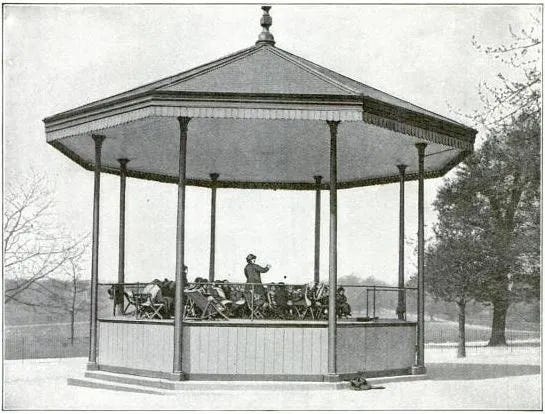
In 1923 he was the defendant in the Stopes v. Sutherland libel trial (of which more later). In 1933 his autobiographical book “Arches of the Years” made the Publishers’ Weekly list.[10] G.K. Chesterton described him as:
“A born writer, especially a born story-teller. Dr. Sutherland, who is distinguished in medicine, is an amateur in the sense that he only writes when he has nothing better to do. But when he does, it could hardly be done better.”[11]
He met some of the heads of state of his era, including Pope Pius XI in 1931,[12] Eamon de Valera in 1935 and 1955, [13] and General Franco in 1946[14]. A talk during his 1939-40 speaking tour of Australia was attended by a former prime minister[15] and he made 15-minute broadcast on the national radio network, the Australian Broadcasting Corporation.[16]
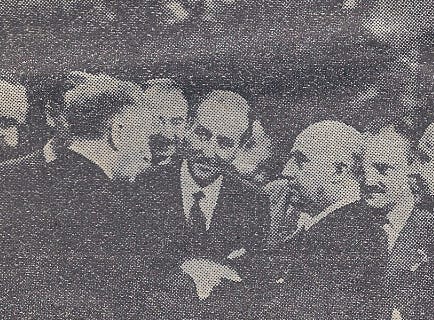
Sutherland is all but forgotten today and, if he is remembered at all, it is as the defendant in the Stopes v. Sutherland libel trial of 1923. This singular event has had more impact on how he is perceived today than any other in his eventful life.
The case arose when Dr Marie Stopes, a famous paleobotanist and celebrity author of “Married Love” (1918), sued him for libel. Stopes and her husband, Humphrey Roe, had opened the Mothers’ Clinic—the first birth control clinic in the British Empire—in Holloway, London in May 1921.[17] Sutherland wrote about the clinic in “Birth Control: A Statement of Christian Doctrine Against the Neo-Malthusians” in 1922:
“Exposing the Poor to Experiment.”
“In the midst of a London slum a woman, who is a doctor of German philosophy (Munich), has opened a Birth Control Clinic, where working women are instructed in a method of contraception described by Professor McIlroy as ‘The most harmful method of which I have had experience’. When we remember that millions are being spent by the Ministry of Health and by Local Authorities – on pure milk for necessitous expectant and nursing mothers, on Maternity Clinics to guard the health of mothers before and after childbirth, for the provision of skilled midwives, and on Infant Welfare Centres – it is truly amazing that this monstrous campaign of birth control should be tolerated by the Home Secretary. Charles Bradlaugh was condemned to jail for a less serious crime.”[18]
Stopes challenged him to debate the issue and, when he did not reply, she served a writ for libel. The case opened in the High Court on February 21, 1923 and, during the five days of the trial, the greatest physicians of the era testified for both sides. When the special jury found that the defamatory words were “true in substance and in fact” Sutherland won. Stopes did not give up there and, encouraged by the jury’s decision that the statements were not fair comment and that they had awarded her damages of £100, she appealed. The decision was reversed in the Court of Appeal in July 1923. Sutherland then appealed to the House of Lords (at the time Britain’s highest court) and he won conclusively in 1924.[19]
Challenging Stopes was no easy feat. She was supported by the ‘big names’ of that era such as Bertrand Russell, J.M. Keynes, G.B. Shaw, H.G. Wells as well as many others who were as eminent but are less well-known today. When Sutherland received the writ, he did not have the money to fight the case and contemplated defending himself in court. With his wife, (my grandmother Muriel) and their young family (my aunt Jane, and uncles John and Peter), he faced financial ruin until a journalist contacted the Archdiocese of Westminster and began the difficult and protracted process of raising money to fight the case.
By contrast, the star of Dr Marie Stopes burned bright during her lifetime and, since her death in 1958, it rose high in the heavens. She has been the subject of at least five biographies,[20] two plays,[21] one operetta and one dramatised documentary.[22] She was nominated as “Woman of the Millennium” by readers of Britain’s Guardian newspaper[23] and one of the “Greatest Britons” by viewers of the BBC.[24] In 2008 she was commemorated for “Family Planning” on postage stamps issued by the Royal Mail.[25]
The comments that accompanied her nomination for “Woman of the Millenium” illustrate why she was celebrated. According to one, she was “The great liberator of women’s excessive childbearing,” while another said: “I can think of no other woman who has done so much towards freeing women from their purely biological role. Women today have her to be grateful for.”[26]
In “Marie Stopes is one of the Great Britons”, the Guardian gushed:
“On Sunday October 20, the BBC announced its viewers’ “Greatest Britons” … Find out why Dr Marie Stopes deserves to be called a Great Briton. Women, can you imagine your body being the property of your husband? Being permanently pregnant through ignorance? Then thank Dr Marie Stopes. The lifestyle and personal fulfilment enjoyed by British women today owes more than many realise to this remarkable character.”[27]
After “Birth Control” was published, Stopes wrote a review for Birth Control News had depicted him as a puppet of the Catholic Church, saying that his book would:
“… impose only on those who are more ignorant than he is. It is nicely calculated to encourage the biased in their prejudices, for now, when speaking about birth control, they can say” ‘A doctor says so!’ They will probably forget that he is a Roman Catholic doctor. The omissions from the book are quite as remarkable as its lies.”[28]
The biographers and hagiographers of Stopes followed her lead and it has led to the creation of a “Catholics against contraceptives” schema in the collective unconscious of Britons. This excerpt from an online biography from B.B.C. History is a good example of the received/accepted history:
“In 1921, Stopes opened a family planning clinic in Holloway, north London, the first in the country. It offered a free service to married women and also gathered data about contraception. In 1925, the clinic moved to central London and others opened across the country. By 1930, other family planning organisations had been set up and they joined forces with Stopes to form the National Birth Control Council (later the Family Planning Association).
“The Catholic church was Stopes’s fiercest critic. In 1923, Stopes sued Catholic doctor Halliday Sutherland for libel. She lost, won at appeal and then lost again in the House of Lords, but the case generated huge publicity for Stopes’s views.
“Stopes continued to campaign for women to have better access to birth control…”[29]
In other words, Sutherland was motivated by Catholic dogma and … that’s it! No other causes are mentioned.
The schema provokes an indignant response from those who disagree with the Church’s teaching on contraception, some of whom are disaffected Catholics. A measure of the effectiveness of the schema is that this author, a grandson of Dr Sutherland and named after him, believed it for many years! Given that no one, family or otherwise, told him the version you are about to read, it is likely that they believed it as well.
The “Catholics against contraceptives” schema is essentially false. The evidence that debunks it include primary and secondary sources including: the transcript of the trial, biographies of Stopes and autobiographies of Sutherland, papers of Stopes and Sutherland and papers in the archive at the Archdiocese of Westminster. The narrow “Catholics against contraceptives” schema ignores the overarching issue: population control as manifested in Malthusianism and British class-based eugenics. Yes, the case included a dispute about contraceptives, but these were merely one of the tools by which wider Malthusian and eugenic aims would be achieved.
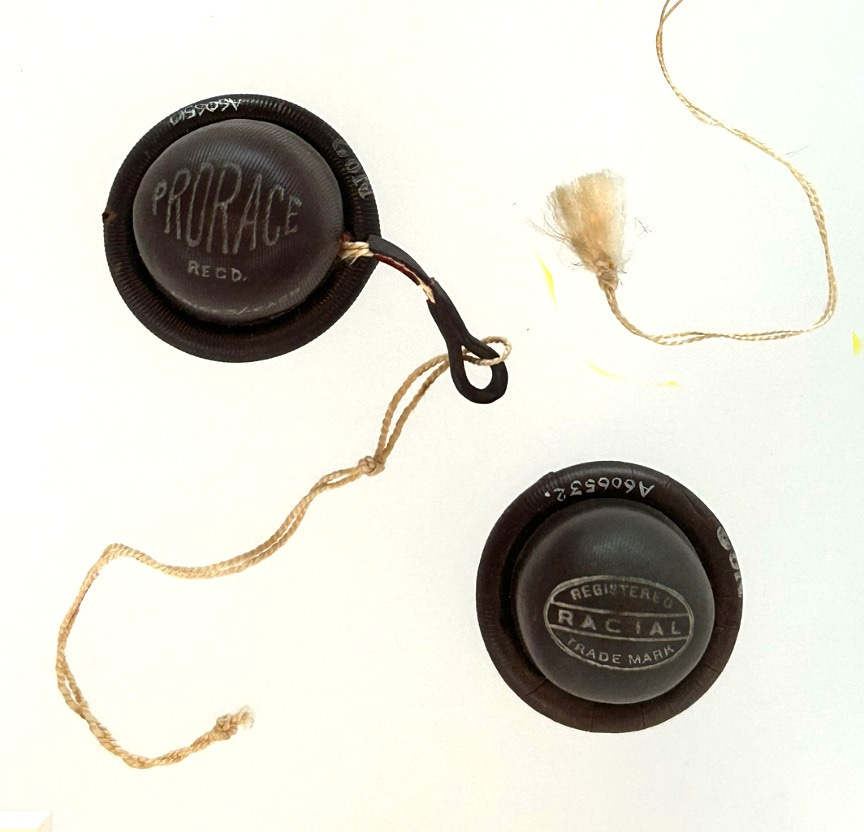
Stopes’ clinic was a eugenic project: she fitted her “ProRace” brand cervical caps to the poor women who attended the clinic while campaigning for the compulsory sterilisation of those who did not.
Sutherland opposed contraceptives on grounds that were not religious per se and thought that making them generally available would (1) lead to national decline and (2) would lead to a British slave state in which the poor were not allowed to have children and had no societal role other than as workers. While Sutherland was a Catholic and was supported by the Catholic Church, his opposition to eugenics had arisen when eugenic thought began to hinder his work as a tuberculosis specialist and he was on record as opposing eugenics long before he became a Roman Catholic.
Given that these claims radically alter the narrative, I have placed each claim as a subheading and provide my evidence that this was the case below.
“…the overarching issue: population control as manifested in Malthusianism and British class-based eugenics. Yes, the case included a dispute about contraceptives, but these were merely one of the tools by which wider Malthusian and eugenic aims would be achieved.”
The growth, quality and size rate of the population in Britain was the source of much attention and, for some, a cause for concern at the beginning of the Twentieth Century.
In the 100 years to 1901, the population had increased from approximately 11 million to 37 million people[30] which alarmed the Malthusians who believed that over-population would lead to war, famine and disease.[31]
From a recorded high of 36.3 births per 1,000 in 1876 the birth rate had steadily dropped and by 1901 had fallen to 28.5, a decline of more than 21 percent.[32] This caused concern to those who wondered who would populate the British Empire, Sutherland among them.
Eugenicists noticed that the falling birth rate was over-represented in the wealthier classes and under-represented among the poorer classes. This “differential birth rate” led Karl Pearson, Galton’s protégé to write “one half of each succeeding generation was produced by no more than a quarter of its married predecessor, and that the prolific quarter was disproportionately located among the dregs of society.”[33] Their concerns that the quality of British “racial stocks” were deteriorating were confirmed by the rejection rate of recruits to the army in the Boer and First World wars.
Stopes was a member of the Malthusian League[34] and the Eugenics Education Society (E.E.S.)[35] She left the E.E.S. in 1921 because she was “annoyed that the Society refused to place birth control prominently on its platform” and set up the Society for Constructive Birth Control and Racial Progress (C.B.C.).[36]
Stopes’ clinic was a eugenic project: she fitted her “ProRace” brand cervical caps to the poor women who attended the clinic while campaigning for the compulsory sterilisation of those who did not.
Stopes testified under oath on the second day of the Stopes v. Sutherland libel trial that:
“The object of the Society is to counteract the steady evil which has been growing for a good many years of the reduction of the birth rate just on the part of the thrifty, wise, well-contented, and generally sound members of our community, and the reckless breeding from the C.3 end, and the semi-feebleminded, the careless, who are proportionately increasing in our community because of the slowing of the birth rate at the other end of the social scale. Statistics show that every year the birth rate from the worst end of our community is increasing in proportion to the birth rate at the better end, and it was in order to try to right that grave social danger that I embarked upon this work.”[37]
“The Tenets of the C.B.C.” specified those who should be prevented from reproduction:
“9. AS REGARDS THE POPULATION AT PRESENT. We say that there are unfortunately many men and women who should be prevented from procreating children at all, because of their individual ill-health, or the diseased and degenerate nature of the offspring that they may be expected to produce. These considerations would not apply to a better and healthier world.
“10.—There are many women unfortunately so constructed—suffering from weakness of certain organs—that they would risk death if they were to attempt to bear children, and who, therefore, should not bear them.
“11.—There are unfortunately many couples so ill-provided with this world’s goods, or with means to acquire them, that they cannot support further children, and therefore should not bear them. Women, owing their own or their husband’s incapacity to be self-supporting, may be permanently or temporarily in such a position owing to disaster or unemployment.”[38]
There is further evidence, such as the logo and slogan of the clinic (a lantern encircled by: “Joyous and deliberate motherhood, a sure light in our racial darkness”)[39] and the brands of cervical cap dispensed there (“Prorace” and “Racial”)[40].
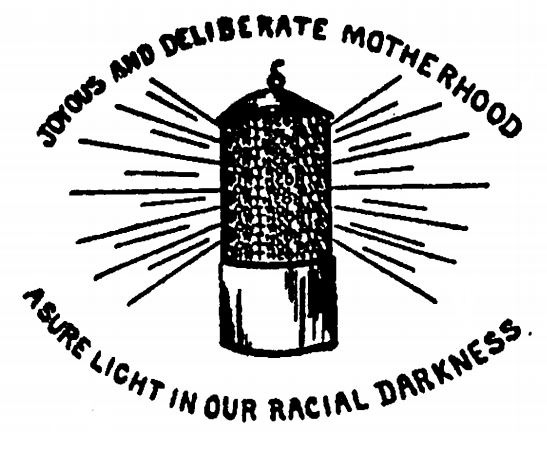
The evidence that Stopes campaigned for compulsory sterilisation of so-called “C.3” women: In September 1920, she sent a copy of her book “Radiant Motherhood” to Frances Stevenson secretary (mistress, and later wife) of Prime Minister, Lloyd George. According to June Rose:
“… she drew attention to the chapter on eugenics in which she commented on the tens of thousands of ‘stunted, warped and inferior infants, who would invariably drain the resources of those with a sense of responsibility’”.
In the covering letter she urged Sevenson to get Mr George to read it because it would “help him in real fact more than a dozen Ministries will ever do.”[41]
Stopes also lobbied parliamentary candidates in the 1921 election asking them to sign a declaration:
“I agree with the present position of breeding chiefly from the C3 population and burdening and discouraging the A1 is nationally deplorable, and if I am elected to Parliament I will press the Ministry of Health to give such scientific information through the Ante-natal Clinics, Welfare Centres and other institutions in its control as will curtail the C3 and increase the A1”[42]
In “Wise Parenthood” Stopes endorsed the gold pin (or spring) which, once fitted, could not be removed without the assistance of a doctor:
“It is, therefore, the one and only method (apart from actual sterilisation) which is applicable and of real help to the lowest and most negligent strata of society. It is therefore a method of the greatest possible racial and social value and should become widely known and practiced.”[43]
Stopes was, she insisted, a scientist, yet the imprecise language she used to designate (and denigrate) those to be sterilized was anything but scientific: “hopelessly bad cases, bad through inherent disease, or drunkenness or character”; the “degenerate, feeble minded and unbalanced”; and “parasites.”[44] Note that “inherent disease” included conditions that we know today are primarily infectious, such as tuberculosis.
Sutherland opposed contraceptives on grounds that were not religious per se and thought that making them generally available would (1) lead to national decline and (2) would lead to a British slave state in which the poor were not allowed to have children and had no societal role other than as workers.
While Sutherland was bound to Catholic dogma in relation to contraceptives, his disapproval of them did not emanate solely from his Catholicism.
While serving as Surgeon on H.M.S. Empress of Britain during the First World War Sutherland was required “to supervise the distribution of ‘prophylactic packets’ to men shortly before they went on shore for a few hours’ leave at Sierra Leone.” He asked the Captain if he could be excused on the grounds that he objected “to acting as the doorkeeper to a brothel. I submitted that some of the men had wives or sweethearts in England, that some were mere boys, and that the ‘packet might deprive a man of his last thought of self-control.’”[45] At the time of this incident, Sutherland was not a Catholic but a member of the Church of Scotland.
Sutherland’s 1922 warning that the indiscriminate distribution of contraceptives would lead to the depopulation of Britain was quoted in at the beginning of this article (“the law of decline is working, and by that law the greatest empires in the world have perished.”).
While the words that were the subject of the libel trial have been quoted frequently, the following paragraphs have not been. It is in these in which Sutherland objects not just to Stopes’ Clinic, but also to the eugenic aims of her work which, he argued, would create a slave state in Britain in which the poor had no societal role other than as workers.
“If, instead of bearing children, women practice birth control, and if children are to be denied to the poor and a privilege of the rich, then it would be very easy to exploit the women of the poorer classes…The English poor have already lost even the meaning of the word “property,” and if the birth controllers had their way the meaning of the word “home” would soon follow. The aim of birth control is generally masked by falsehood, but the urging of this policy on the poor points unmistakably to the Servile State”[46]
The Servile State was the title of the book written by his contemporary Hilaire Belloc.
While Sutherland was a Catholic and was supported by the Catholic Church, his opposition to eugenics had arisen when eugenic thought began to hinder his work as a tuberculosis specialist and he was on record as opposing eugenics long before he became a Roman Catholic.
None of Stopes’ biographers have “joined the dots” to explain how a medical specialist in tuberculosis in 1912 comes to accuse Stopes of “exposing the poor to experiment” ten years later other than that he was a Roman Catholic. Yet Sutherland began to oppose eugenics years before he became a Roman Catholic. He had been “brought up a Scots Presbyterian” but was in 1904 “in theory an agnostic and in practice an atheist.”[47]
When Sutherland commenced specialising in tuberculosis, consumption was thought to be primarily caused by a person’s heredity. Adherents of eugenics thought that the disease would best be eliminated by breeding out the tuberculous from British racial stocks[48]. He changed his mind and in 1912, he published research that showed that consumption was primarily caused by infection.[49]
The next step in his religious journey occurred on the outbreak of World War 1 when he joined the Church of Scotland. “In August 1914 there came the hazards of war, and for me the time had come when it was expedient to make my peace with God. At a few hours’ notice the Church of Scotland admitted me to her membership.”[50]
Sutherland spoke out against eugenicists in a 1917 speech “Consumption: Its Cause and Cure”. In it he attacked them as an obstacle to the prevention and cure of consumption describing them as “race breeders with the souls of cattle breeders”.[51]
In 1919, Sutherland was accepted into the Catholic Church.[52] Social historian Ann Farmer debunks the belief of eugenicists “that opposition to eugenics was directed by the Catholic Church” and pointed out that “it is more likely that Laetitia Fairfield, Chesterton, and Sutherland, all converts, were drawn to the Church because of their criticism of eugenics/reproductive control”.[53]
The example of eugenics hindering the work is provided by Sir James Barr, president of the British Medical Association who pointed out that through curing disease, “Nature’s method of eliminating the unfit has been at least partially suspended by our efforts.” Barr proposed that doctors act considering not merely the needs of the patients but the needs of the race. He mentioned the efforts to treat and cure tuberculosis:
“If we could only abolish the tubercle bacillus in these islands we would get rid of tuberculous disease, but we should at the same time raise up a race peculiarly susceptible to this infection—a race of hothouse plants which would not flourish in any other environment. We would thus increase at an even greater rate than we are doing at present, nervous instability, the numbers of insane and feeble-minded. Nature, on the other hand, weeds out those who have not got the innate power of recovery from disease, and by means of the tubercle bacillus and other pathogenic organisms she frequently does this before the reproductive age, so that a cheek is put on the multiplication of idiots and the feeble-minded. Nature’s methods are thus of advantage to the- race rather than to the individual.”[54]
In 1918 speech he was more explicit:
“...the elimination of the tubercle bacillus is not worth aiming at. It forms a rough, but on the whole very serviceable check, on the survival and propagation of the unfit...Personally, I am of opinion...that if to-morrow the tubercle bacillus were non-existent, it would be nothing short of a national calamity. We are not yet ready for its disappearance.”[55]
In 1921, Barr wrote to congratulate Stopes on the opening of her Mothers’ Clinic:
“You and your husband have inaugurated a great movement which I hope will eventually get rid of our C3 population and exterminate poverty. The only way to raise an A1 population is to breed them.”[56]
He became a vice-president of the Society for Constructive Birth Control and Racial Progress and testified for the plaintiff on the first day of the trial.
Given all of this evidence, it is surprising that the “Catholics against contraceptives” narrative had not already been debunked. That said, it is unlikely that the false narrative will not change anytime soon for the following reasons:
Firstly, there are vested interests in maintaining the status quo. Reputations of academics and institutions are built on, and benefit from, the false narrative, and they are unlikely to agitate for change. Would, for instance, the biographers of Stopes who have misunderstood Sutherland’s motives admit this shortcoming and revise their work?
Secondly, it is likely that historians of Stopes may feel pressure to adhere to the party line. When “Marie Stopes and the Sexual Revolution” was published in 1992, an interview with June Rose, the author, was published in The Independent. It read:
“What the author reveals about her subject will cause a great deal of controversy, possibly exposing the biographer to ridicule, perhaps even cries of betrayal. “I am very apprehensive about the book’s reception,” she said.
“…She does not talk easily about herself and is somewhat fearful of being known as the woman who brought Marie Stopes crashing from her pedestal.” [57] (McCrystal, 1992)
Thirdly, as narratives go, doctor curing the sick beats elitist eugenicist snob every time! The narrative that would replace the existing false one has great secular appeal and might cause the realignment of sympathy from Stopes to Sutherland. For these reasons, it is likely that the old narrative will continue.
[1] See: https://www.bbc.com/news/health-46118103 viewed 11 June 2019.
[2] “Birth Control” (1922) Messrs. Harding & More, Ambrosden Press, 119 High Holborn, London, W.C.1. Page 155. See: https://archive.org/details/birthcontrolstat00suth/page/154 viewed 21 June 2019.
[3] “Dangers of Birth Control”. Weekly Freeman’s Journal, Saturday 24 May 1924. Page 7.
[4] Uxbridge and West Drayton Gazette. Friday 27 September 1929. Page 21.
[5] “Control of Life” (1944) by Dr Halliday Sutherland. Burns, Oates and Washbourne, Ltd. London S.W.1.
[6] Consumption was the name for tuberculosis of the lungs. The disease killed 50,000 each year in Britain at that time, a further 20,000 died from other forms of the disease, and a further 150,000 would be disabled (Source: Sutherland, H. (1917). Consumption: Its Cause and Cure. London: Red Triangle Press). When the disease struck the breadwinner, whole families would be thrown into destitution. According to Sutherland, tuberculosis was the cause of 10 percent of pauperism in Britain at that time. See: Sutherland, H., & (Editor). (1911). The Control and Eradication of Tuberculosis. London and Edinburgh: William Green and Son. See: https://archive.org/details/39002010860915.med.yale.edu/page/6 viewed 21 June 2019.
[7] Sutherland, H., & (Editor). (1911). The Control and Eradication of Tuberculosis. London and Edinburgh: William Green and Son. See: https://archive.org/details/39002010860915.med.yale.edu/page/6 viewed 21 June 2019.
[8] The film was “The Story of John M’Neil” and it can be viewed free of charge at the British Film Institute website: https://player.bfi.org.uk/free/film/watch-the-story-of-john-mneil-1911-online.
[9] See: http://www.formerchildrenshomes.org.uk/open_air_school_regents_park.html (viewed 21 June 2019) and https://ezitis.myzen.co.uk/regentsparkoas.html (viewed 21 June 2019). There are photographs of the school at: https://hallidaysutherland.com/pictures/ viewed 21 June 2019.
[10] “Making the List: A Cultural History of the American Bestseller, 1900-1999” (1992) by Michael Korda, Barnes and Noble Books, New York. Page 67.
[11] “Documents of the Twentieth Century” by G.K. Chesterton The Listener December 12, 1934.
[12] See: https://hallidaysutherland.com/2019/03/01/pope-pius-xi/ viewed 21 June 2019.
[13] See: https://hallidaysutherland.com/2015/09/01/hgs-meets-de-valera-1/ and https://hallidaysutherland.com/2015/10/01/a-second-meeting-with-eamon-de-valera/ viewed 21 June 2019.
[14] See: https://hallidaysutherland.com/2018/11/01/franco/ viewed 21 June 2019.
[15] See: https://trove.nla.gov.au/newspaper/article/2516648 viewed 21 June 2019.
[16] See: https://hallidaysutherland.com/2017/01/26/what-the-british-empire-means-to-the-world/ viewed 21 June 2019.
[17] Rose, J. (1992). Marie Stopes and the Sexual Revolution. London: Faber and Faber Limited. Page 144.
[18] Sutherland, H. (1922). Birth Control: A Statement of Christian Doctrine Against the Neo-Malthusians. London: Harding & More. Page 101. See: https://archive.org/details/birthcontrolstat00suth/page/100 viewed 21 June 2019.
[19] Femina Books. (1967). The Trial of Marie Stopes (1st ed.). (M. Box, Ed.) London: Femina Books Ltd.
[20] The five biographies are: “The Authorized Life of Marie C. Stopes” (1924) by Aylmer Maude, “Marie Stopes: A Biography” (1962) by Keith Briant, “Passionate Crusader” (1977) by Ruth Hall “Marie Stopes and the Sexual Revolution” (1992) by June Rose and “Marie Stopes’ Sexual Revolution and the Birth Control Movement” (2018) by Marion Clare Debenham. All of these subscribe to the “Catholics against contraceptives” schema. None of them make the link between Dr Sutherland’s work as a doctor specialising in tuberculosis to his subsequent opposition to Stopes.
[21] The plays: “Married Love” reviewed in The Stage and Television Today 19 May 1988, Page 11 (see: https://www.britishnewspaperarchive.co.uk/viewer/bl/0001180/19880519/071/0011 viewed 21 June 2019) and Escaping the Storm by Peter John Cooper (See:
viewed 21 June 2019).
[22] “Marie Stopes: Sexual Revolutionary” was shown on BBC One on 25 June 1970 (See: https://genome.ch.bbc.co.uk/schedules/bbcone/london/1970-06-25 viewed 21 June 2019).
[23] See: https://www.theguardian.com/world/1999/jan/23/gender.women viewed 11 June 2019.
[24] See: https://www.theguardian.com/microsite/mariestopes/uk/story/0,,813612,00.html viewed 11 June 2019.
[25] See: https://www.telegraph.co.uk/news/uknews/2602221/New-stamps-mark-women-of-distinction-Marie-Stopes.html viewed 11 June 2019.
[26] See: https://www.theguardian.com/world/1999/jan/23/gender.women viewed 21 June 2019.
[27] See: https://www.theguardian.com/microsite/mariestopes/uk/story/0,,813612,00.html viewed 21 June 2019.
[28] Hall, R. (1977). Passionate Crusader: The Life of Marie Stopes. New York: Harcourt Brace Jovanovich. Page 207.
[29] See: https://www.bbc.co.uk/history/historic_figures/stopes_marie_carmichael.shtml viewed 17 June 2019.
[30] Soloway, R. A. (1990). Demography and Degeneration: Eugenics and the Declining Birthrate in Twentieth Century Britain (Digital Edition). University of North Carolina Press.
[31] Incredibly, the Malthusian League called for a moratorium on children during the First World War. The reasons summarised by Richard Soloway as follows: “War babies could only consume, not produce; many would be fatherless; their mothers would have to neglect them for war work, and they would be particularly vulnerable to the hard winters and fuel and food shortages which were bound to come. Convinced that the war had been caused by overpopulation in the first place, the Malthusian League thought it foolish to produce another generation of surplus people whose presence would only compound the difficulties of the reconstruction.” See: Neo-Malthusians, Eugenists, and the Declining Birth-Rate in England 1900-1918 by Richard A. Soloway. “Albion: A Quarterly Journal Concerned with British Studies” Vol.10, No. 3 (Autumn, 1978), pp. 226-286.
[32] Soloway, R. A. (1990). Demography and Degeneration: Eugenics and the Declining Birthrate in Twentieth Century Britain (Digital Edition). University of North Carolina Press.
[33] Kevles, D. J. (2004). In The Name of Eugenics: Genetics and the Uses of Human Heredity (5th Printing ed.). Cambridge, Massachusetts: Harvard University Press.
[34] Hall, R. (1977). Passionate Crusader: The Life of Marie Stopes. New York: Harcourt Brace Jovanovich. Page 198.
[35] Searle, G. (1976). Eugenics and Politics in Britain 1900-1914. Leyden: Noordhoff International Publishing. Page 102. According to Searle, Stopes joined the Eugenics Education Society in 1912.
[36] “The Racial Imperatives of Sex: Birth Control and Eugenics in Britain, the United States and Australia in the Interwar Years” by Jane Carey, Monash University Women’s History Review 21, no. 5 (2012): 733-752. http://www.tandfonline.com/toc/rwhr20/21/5
[37] C Femina Books. (1967). The Trial of Marie Stopes (1st ed.). (M. Box, Ed.) London: Femina Books Ltd. Page 76.
[38] “The Tenets of the CBC” were published in Appendix C of “The Authorised Life of Marie C. Stopes” by Aylmer Maud. Williams & Norgate Ltd, Covent Garden 1924. See https://archive.org/details/b29977587/page/222 viewed 19 June 2019.
[39] See: https://hallidaysutherland.com/2018/03/11/babies-in-the-right-place/ viewed 21 June 2019.
[40] See: http://broughttolife.sciencemuseum.org.uk/broughttolife/objects/display?id=92338 and https://www.gettyimages.com.au/detail/news-photo/racial-brand-size-2-contraceptive-cap-made-by-bcm-news-photo/90763429 viewed 21 June 2019.
[41] Rose, J. (1992). Marie Stopes and the Sexual Revolution. London: Faber and Faber Limited. Page 138.
[42] Ibid. Page 161.
[43] Stopes, M. C. (1920). Wise Parenthood: A Practical Sequel to Married Love (6th ed.). London: G.P. Putnam’s Sons Ltd, London. Page 37. Retrieved January 3, 2019, from https://archive.org/details/cihm_990552/page/n7.
[44] Stopes, M. (1921). Radiant Motherhood: A Book for Those who are Creating the Future. London: G.P. Putnam’s Sons Limited. Chapter 20. Retrieved December 29, 2018, from https://archive.org/details/radiantmotherhoo00stopuoft/page/n5
[45] Sutherland, H. (1944). Control of Life. London: Burns, Oates and Washbourne, Ltd. Page 132.
[46] Sutherland, H. (1922). Birth Control: A Statement of Christian Doctrine Against the Neo-Malthusians. London: Harding & More. Page 102. See: https://archive.org/details/birthcontrolstat00suth/page/102 viewed 21 June 2019.
[47] Sutherland, H. (1956). Irish Journey. London: Geoffrey Bles. Page 11.
[48] For example, Tuberculosis, Heredity and Environment being a lecture by Karl Pearson, F.R.S. at the Galton laboratory for National Eugenics on 12 March 1912 and in particular, the final paragraph. See: http://www.biodiversitylibrary.org/item/77020#page/5/mode/1up viewed 19 June 2019.
[49] “The Soil and the Seed in Tuberculosis” by Halliday Sutherland British Medical Journal. 1912 Nov 23; 2(2708): 1434–1437. See: https://www.ncbi.nlm.nih.gov/pmc/articles/PMC2334807/ viewed 19 June 2019.
[50] Sutherland, H. (1934). A Time to Keep. Geoffrey Bles. Page 208.
[51] See: https://hallidaysutherland.com/research/consumption-its-cause-and-cure/ viewed 21 June 2019.
[52] Sutherland, H. (1934). A Time to Keep. Geoffrey Bles. Page 239.
[53] Farmer, A. (2008). By Their Fruits: Eugenics, Population Control, and the Abortion Campaign. Washington D.C.: The Catholic University of America Press. Page 139.
[54] Barr, S. J. (1912, July 27). President’s Address Delivered at the Eightieth Annual Meeting of the British Medical Association. British Medical Journal, 157-163. Retrieved January 6, 2019, from https://www.ncbi.nlm.nih.gov/pmc/articles/PMC2334152/
[55] Barr, S. J. (1918, September 21). The future of the medical profession. British Medical Journal, 318-321. Retrieved July 16, 2018, from https://www.ncbi.nlm.nih.gov/pmc/articles/PMC2341835/
[56] Stopes, M. (1921). Queen’s Hall Meeting on Constructive Birth Control: Speeches and Impressions. London: G.P. Putnam’s Sons Ltd. Second edition.
[57] McCrystal, C. (1992, August 23). Notebook: “The monster and the master race: She altered women’s lives for ever. But a new book reveals that Marie Stopes’s motives were distinctly dubious.” The Independent. Retrieved May 23, 2019, from https://www.independent.co.uk/voices/notebook-the-monster-and-the-master-race-she-altered-womens-lives-for-ever-but-a-new-book-reveals-1541975.html